Banknotes
Fiji Unveils New Polymer Banknotes Featuring MOTION SURFACE® Security
The Reserve Bank of Fiji (RBF) unveiled a new series of polymer banknotes on December 2, marking a proud milestone in the country’s economic and cultural journey. In Suva, His Excellency Ratu Naiqama Lalabalavu, President of the Republic of Fiji, together with RBF Governor Ariff Ali, presented the new family of notes combining modern security technology with designs that celebrate the nation’s people, culture and nature.
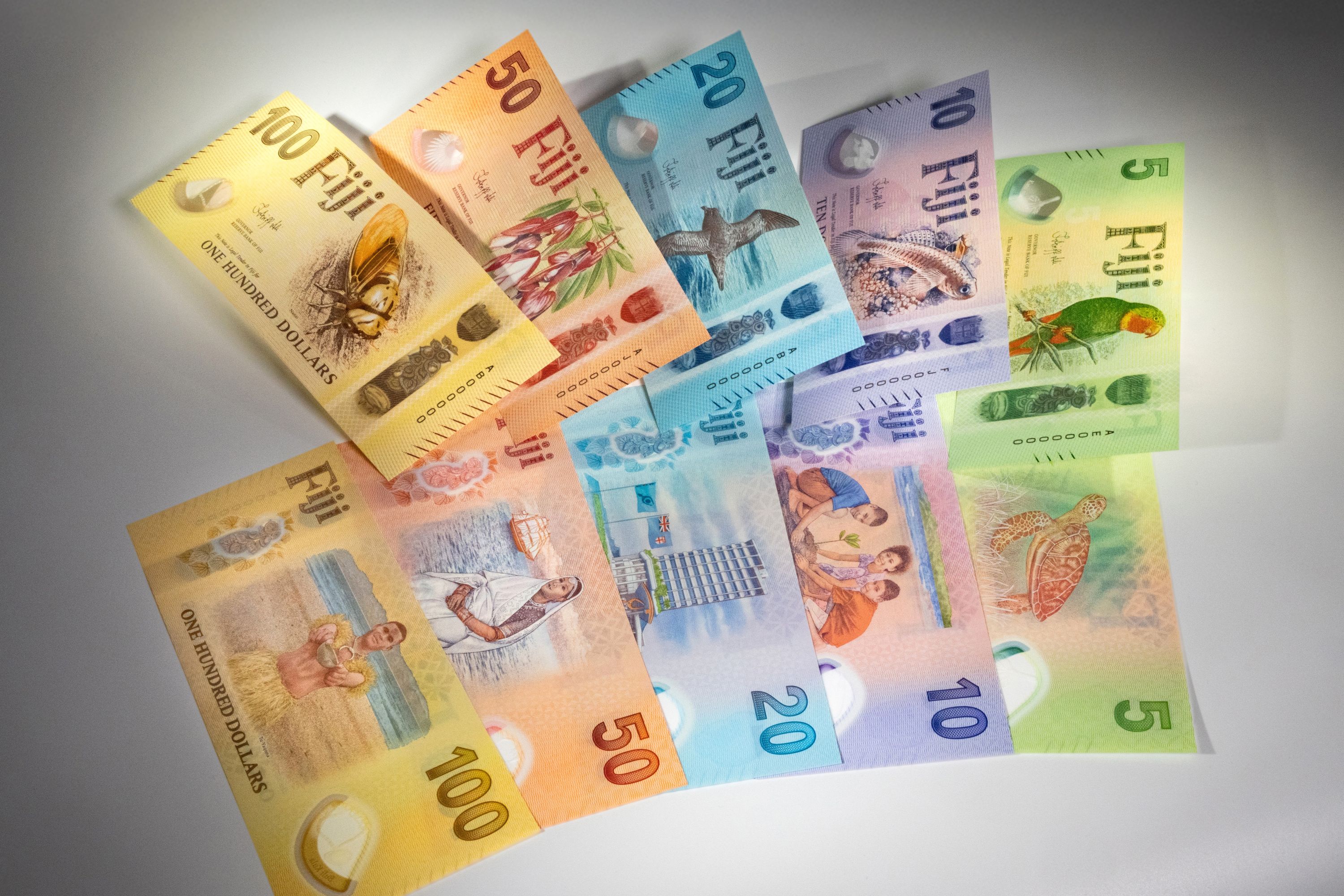
The five new banknotes – 5, 10, 20, 50 and 100 dollars – will enter circulation on January 2, 2026. With refreshed imagery and advanced security including Crane Currency’s micro-optic feature MOTION SURFACE®, the series is designed to protect the public from emerging global counterfeiting threats while reflecting what Fiji is all about: its people, resources and national heritage.
A Launch that Celebrated Pride and Identity
The launch event took place in the capital city, Suva. In attendance were President Ratu Naiqama Lalabalavu, Prime Minister Sitiveni Rabuka, members of Parliament, representatives of the diplomatic corps and the business community, as well as senior leaders and staff from the RBF. From Crane Currency, President Dr. Aleta Richards joined the celebrations together with a delegation of Crane specialists, including the lead designer of the new series, Svetlana Nekrasova.
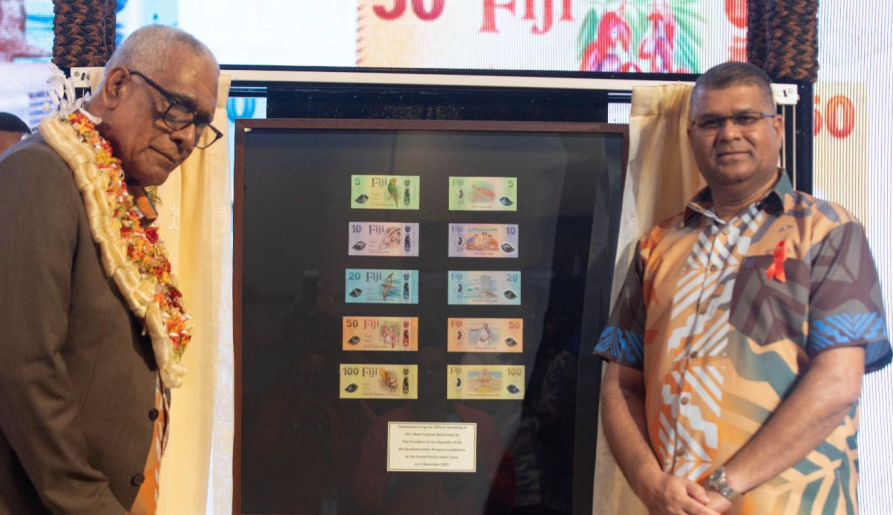
The President and the Governor jointly revealed the new notes, guiding guests through the refreshed designs and a series of short films that showcased the banknotes’ security and design features.
“Our currency of banknotes and coins that pass through our hands every day remains a foundation of trust, inclusion and resilience in our economy,” said RBF Governor Ariff Ali. “Cash strengthens trust in our monetary system. When Fijians hold a banknote, it is not just a symbol of our history and identity, they are holding a promise backed by trust in the Reserve Bank of Fiji and the Government of Fiji – a promise of value, stability and confidence that it will be accepted every day, every time for goods and services.”

Five New Banknotes that Tell Fiji’s Story
Fiji is a Pacific island nation made up of more than 300 islands and over 500 islets in the South Pacific Ocean. The capital Suva is located on Viti Levu, the largest island and home to most of Fiji’s population of around 930,000 people.
A rich mix of cultures, landscapes and biodiversity has been a central inspiration for the new series of banknotes. Each denomination in the new series retains familiar and much-loved motifs of Fiji’s distinctive flora and fauna on the front, providing continuity for the public and honoring designs that Fijians already recognize and trust.
The reverse sides introduce new imagery depicting people, heritage, flora, fauna and seascapes that together capture the cultural and geographical uniqueness of Fiji. From coastal villages and traditional crafts to native plants and marine life, each denomination highlights different aspects of the country’s identity, its multiracial heritage and its close relationship with the land and ocean.
Staying Ahead of a Changing Counterfeiting Threat
Counterfeiting in Fiji today is regarded as negligible. Yet the global threat landscape is changing rapidly, with organized criminal networks increasingly able to coordinate the production and distribution of highly deceptive simulated security features and counterfeit banknotes.
“Today, counterfeiting has evolved beyond individuals with home printers to organized operations using the same sophisticated equipment as legitimate currency producers,” said Dr. Aleta Richards, President of Crane Currency. “To stay ahead, central banks must invest in modern technology – and Crane’s micro-optic banknote security feature MOTION SURFACE has never been counterfeited.”
By adopting MOTION SURFACE across all denominations, the Reserve Bank of Fiji is ensuring that its new banknotes are protected by a proven, state-of-the-art security feature that is both highly secure and easy for the public to use.
MOTION SURFACE – Striking 3D Security
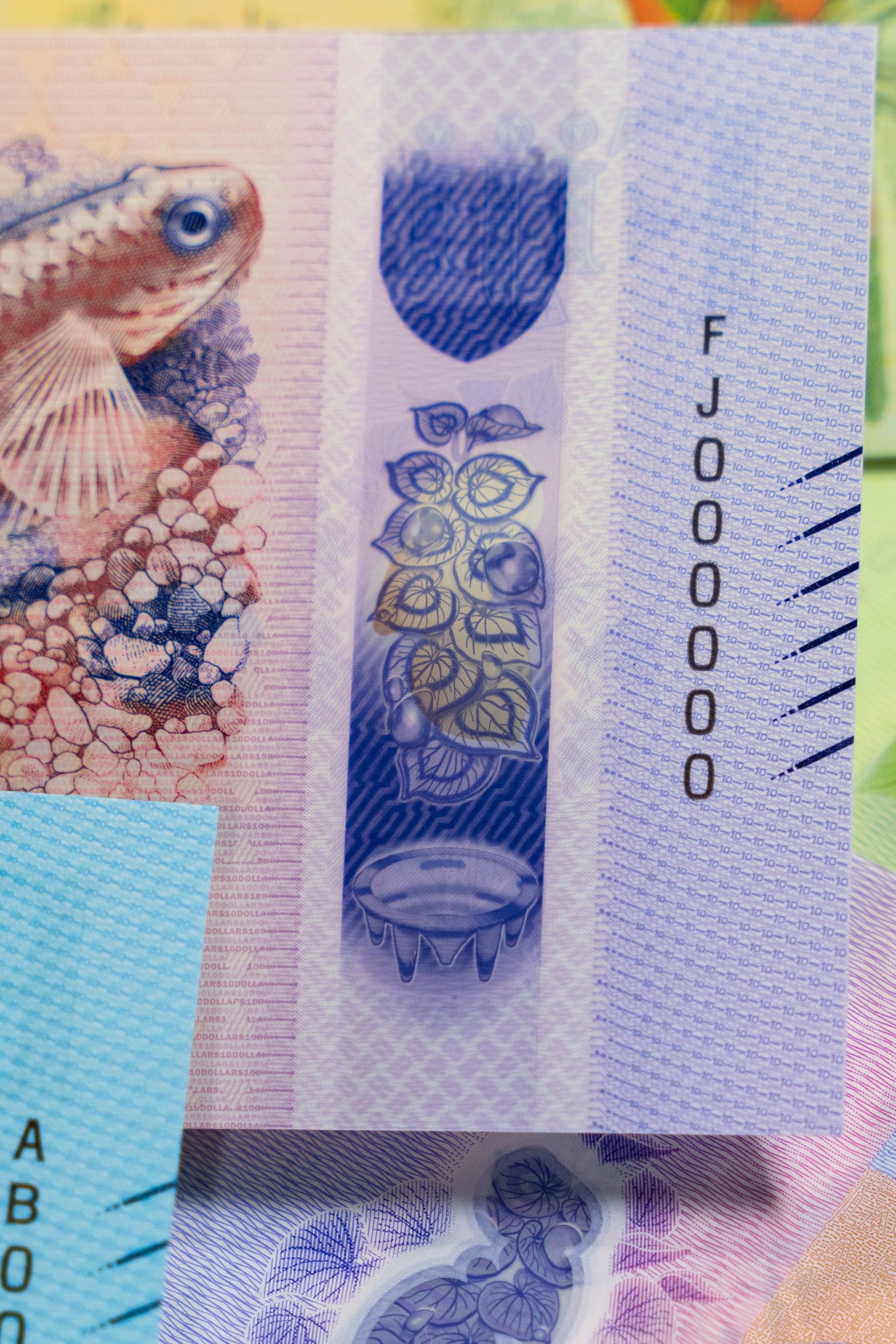 Each of Fiji’s new banknotes carries a clearly visible MOTION SURFACE stripe on the front, integrated with the overall design of the note. When the banknote is tilted or moved, the micro-optic feature comes to life: the Fijian Coat of Arms appears and disappears, and water droplets in three dimensions rest on yaqona leaves that shimmer.
The yaqona leaves are also visible from the back of the banknote, making it easy for the public to confirm that they are handling a genuine note simply by tilting it.
The notes also include security elements such as iridescent inks, raised printing and hidden imagery that is revealed under UV light. To these are added machine-readable features used by cash-handling equipment. Together, they provide multiple layers of protection against counterfeiting, for the public and for equipment used by banks and retailers.
Engaging Fijians with Their New Banknotes
To support the launch, the RBF has worked closely with Crane Currency through its Public Engagement program. Over the past year, the two teams have prepared educational materials including print and digital content that explain the new designs and security features and support the RBF’s well-established collector and numismatic sales.
“It is a privilege to learn from RBF about its experience in serving collectors, and to have an opportunity to help further elevate that experience. The RBF has for many years cultivated a loyal following interested in Fiji banknotes, their design and security features”, says Mari-Anne Snäll, Senior Marketing Manager & Public Engagement Lead for Crane Currency.
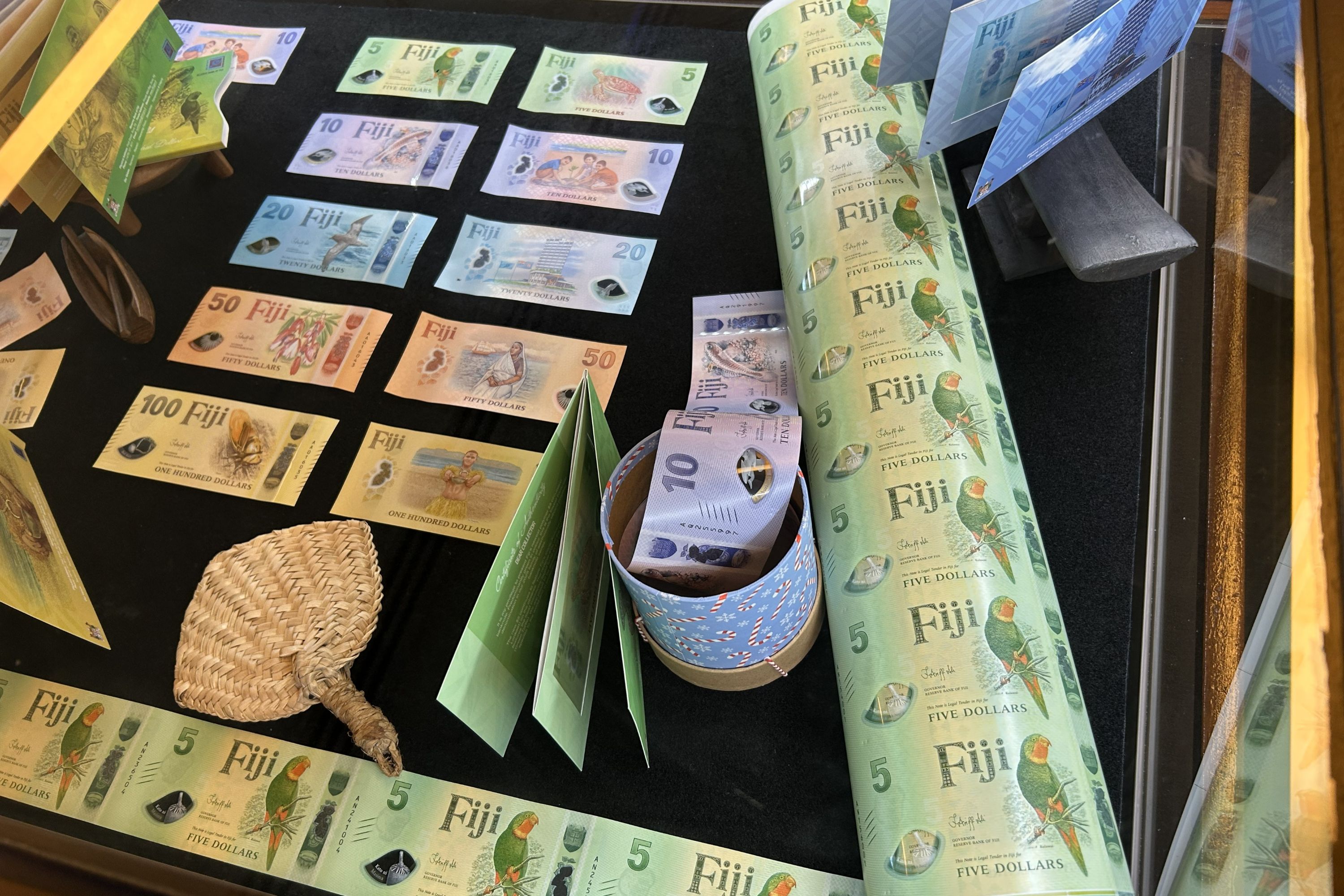
“As always, I am most interested in learning how the public reacts to the new banknotes, something I will follow closely with the RBF in the new year. We’ll also be monitoring closely the strength of demand for the collector sets.”
Training sessions and awareness activities are being rolled out for banks, retailers and community organizations to ensure a smooth transition when the notes enter circulation on 2 January 2026. The communication campaign will continue in the months ahead, helping the public to familiarize themselves with the new designs and use of the security features.
As the notes enter circulation, Fijians will be able to see and feel a tangible reminder of their country’s past, present and future – and to take pride in having one of the world’s most advanced and modern banknote series in their hands.